You’ve probably spent an hour today on TikTok or Instagram without thinking twice about it. Now imagine putting that same hour into a skill you could actually get paid for.
Here’s the thing most people in Pakistan get wrong: they assume digital skills cost money. Some private institute wants Rs. 30,000 for a “certified” course, and people either pay it or give up on the idea entirely. Neither is necessary. In 2026, the same material taught in those institutes is sitting online for free, courtesy of universities, tech companies, and a government program most people have heard of but never actually used.
Doesn’t matter if you’re a student, working a 9 to 5, home all day, or just tired of scrolling for nothing. If you have a laptop and internet, you have what you need to start.
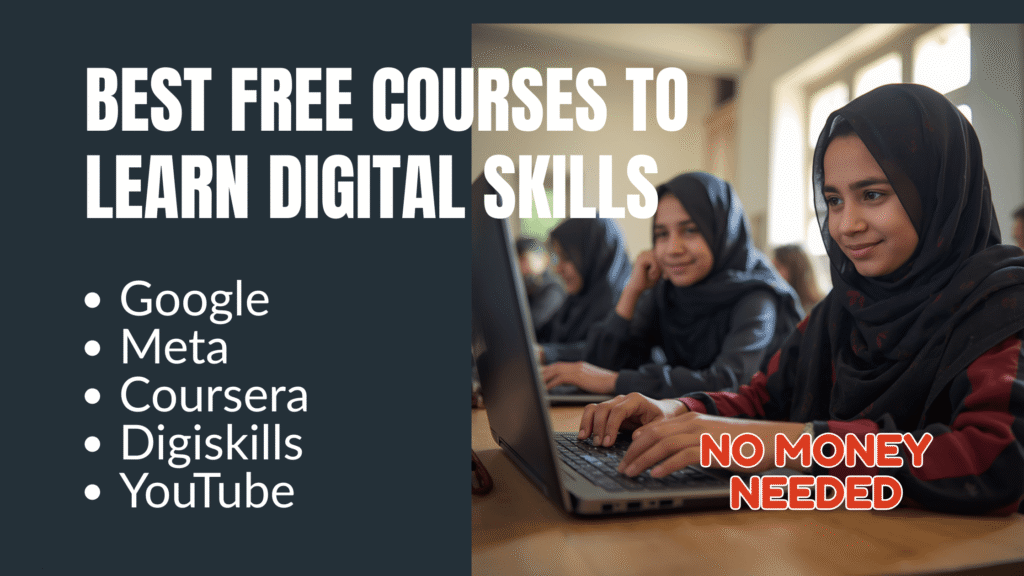
Why bother with digital skills right now
Pakistan’s freelance scene keeps growing, and the demand isn’t slowing down. Businesses abroad are hiring remote workers for:
- Digital marketing
- SEO
- Graphic design
- Video editing
- AI prompt engineering
- Virtual assistance
- Web development
- Content writing
- Social media management
None of this requires a degree. It requires a laptop, internet, and showing up consistently, which honestly is the part most people struggle with more than the actual learning.
Where to actually learn this stuff for free
DigiSkills.pk (start here if you’re at zero)
This is the one built specifically for Pakistanis, funded by the Ministry of IT. If you don’t know where to begin, begin here.
Courses include freelancing, SEO, digital marketing, graphic design, WordPress, creative writing, e-commerce, QuickBooks, and video editing.
What makes it worth your time isn’t just that it’s free. It’s taught in that easy Urdu-English mix, comes with a government-recognized certificate, and the instructors actually understand the stuff that trips up Pakistani freelancers specifically, like getting paid through Payoneer or Wise and setting up accounts on platforms that weren’t really built with us in mind.
Google Digital Garage-Intellum
If you want a name on your profile that international clients instantly trust, this is it.
The standout course is Fundamentals of Digital Marketing, covering SEO, Google Ads, social media marketing, email marketing, analytics, and general online business growth.
Why is it free? Simple. The more people who understand digital marketing, the more people eventually spend on Google Ads. It’s not charity, and that’s fine. Use it anyway.
Coursera
A lot of people take one look at the subscription price and close the tab. That’s a mistake, because most courses have an Audit option.
Auditing gets you the video lectures, readings, and (on many courses) the assignments. You just won’t get the certificate.
If you do want the certificate, apply for Financial Aid. Plenty of learners in Pakistan have gotten it approved, usually within about two weeks, though this varies by course and can change without notice. Universities on the platform include Stanford, Yale, University of Michigan, Google, IBM, and Meta.
edX
Same audit-for-free model as Coursera, except the courses come from places like Harvard and MIT.
Strong topics here include artificial intelligence, data science, Python, cybersecurity, business management, and computer science. If your goal is actually learning the material rather than collecting a wall of certificates, this is a solid stop.
Meta Blueprint
Want to understand how businesses actually run ads on Facebook, Instagram, and WhatsApp? This is Meta’s own training, straight from the source.
Covers Facebook Ads, Instagram marketing, Meta Ads Manager, social strategy, Reels marketing, and lead generation. It’s free, it’s built by the platform itself, and it can prep you for the optional Meta certification exams if you want to go that far. Good pick for freelancers and small business owners alike.
YouTube
Still the biggest free classroom on the internet, and I don’t think that changes anytime soon. SEO, WordPress, graphic design, video editing, AI tools, content writing, web development, freelancing advice, whatever you’re stuck on, someone’s made a video about it.
New content drops daily, it’s free, and it’s great for solving one specific problem fast rather than sitting through a whole structured course.
One tip that actually matters here: pick a few creators you trust and finish their playlists start to finish. Jumping between twenty random videos from different channels is how people end up with scattered half-knowledge and nothing to show for it.
The digital skills worth your time in 2026
Not all skills are equal. Some have far more freelance demand than others, so pick based on what people are actually hiring for, not just what sounds interesting.
AI prompt engineering. Every business is using AI tools now, and most of them are bad at it. Knowing how to write effective prompts, automate a workflow, or get ChatGPT and Claude to actually produce usable output is quickly becoming a paid skill on its own.
Video editing. Short-form video isn’t going anywhere. Reels, TikTok, YouTube Shorts, every creator and brand needs someone who can edit fast and edit well. Learn CapCut to start, then move into Premiere Pro or DaVinci Resolve if you want to go further. Freelance work here comes quicker than people expect.
SEO. This is the one that pays long-term. Companies pay specialists to grow traffic, improve rankings, do keyword research, build backlinks, and speed up sites. It’s not flashy work, but it’s steady, and it compounds the longer you’re good at it.
Graphic design. Logos, thumbnails, social posts, business cards, ads, businesses never stop needing this. Canva is fine to start with. Photoshop and Illustrator come in once you want to charge more.
Virtual assistant work. Email management, data entry, customer support, scheduling, research. Low barrier to entry, and probably the easiest online career to get into if you don’t have a technical background yet.
Content writing. Blog posts, website copy, product descriptions, newsletters, captions. If your English is solid and you’re willing to practice daily, this turns into real income faster than most people expect.
A 90-day plan, if you actually want to finish
Trying to learn everything at once is how most people quit by week two. Pick one skill and go deep.
Month 1: Get the basics down. Finish the Freelancing course on DigiSkills. Set up a proper Gmail account and a LinkedIn profile. Work on your basic communication skills. Pick the one skill you’re going to specialize in and stop second-guessing it.
Month 2: Actually build the skill. Complete one full course in that skill. Practice daily, not just on weekends. Watch YouTube for the gaps your course didn’t cover. Build 5 to 10 sample projects. Clients hire what they can see, not a certificate sitting in your inbox.
Month 3: Start freelancing for real. Put together a simple portfolio. Get your profiles live on the platforms you plan to use. Apply for beginner-level projects, even the small ones. Keep practicing while you wait for replies, because you will be waiting.
Your first paid project might take longer than you’d like. That’s normal. Showing up daily usually beats raw talent here.
A few things that actually speed this up
Study at least an hour a day, and take notes while you do it instead of just watching passively. Practice right after each lesson, not three days later when you’ve forgotten half of it. Build real projects instead of collecting tutorials you never apply. Join a community or two so you’ve got someone to ask when you’re stuck.
An hour a day for three months adds up to over 90 hours of focused learning. That’s more than most people manage in a full year of “someday I’ll get around to it.”
Final word
You don’t need a coaching center that charges thousands of rupees to figure this out. The barriers that used to exist mostly don’t anymore. What’s left is consistency, and that part is on you.
Pick one skill. Finish one course. Build something real. Keep going. The progress feels small daily, but three months from now you’ll be somewhere you couldn’t have gotten to by just thinking about it.
The best time to start was yesterday. The second best time is today.
FAQs
Yes, for the most part. A few charge only if you want the official certificate, and DigiSkills gives out free certificates after you complete the course.
SEO, digital marketing, graphic design, content writing, virtual assistance, and video editing are all solid entry points with real freelance demand behind them.
Yes, but the course alone won’t do it. You need practical experience, a portfolio, and you need to keep applying even when the first few attempts go nowhere.
No. Content writing, SEO, virtual assistance, and digital marketing all run fine on an entry-level laptop with a stable connection.
With 1 to 2 hours a day, most beginners have a solid foundation in about three months. You’ll likely start freelancing before you’d call yourself an expert, and that’s fine. Nobody waits for perfect.