Every VA course on YouTube teaches the same thing: answer emails, manage calendars, do data entry. That was the job in 2019. It is not the job anymore.
Clients today do not want someone who can just follow instructions. They want someone who can follow instructions faster than three other assistants, using AI tools to cut a two-hour task down to twenty minutes. That difference is where the money is. A generic VA in Pakistan competes for $3 to $5/hour gigs. An AI-powered VA competes for $8 to $20/hour retainers, sometimes more, because they are selling output, not hours.
This guide walks through exactly how to position yourself, which tools to actually learn, what to charge, and how to land your first client without a portfolio.
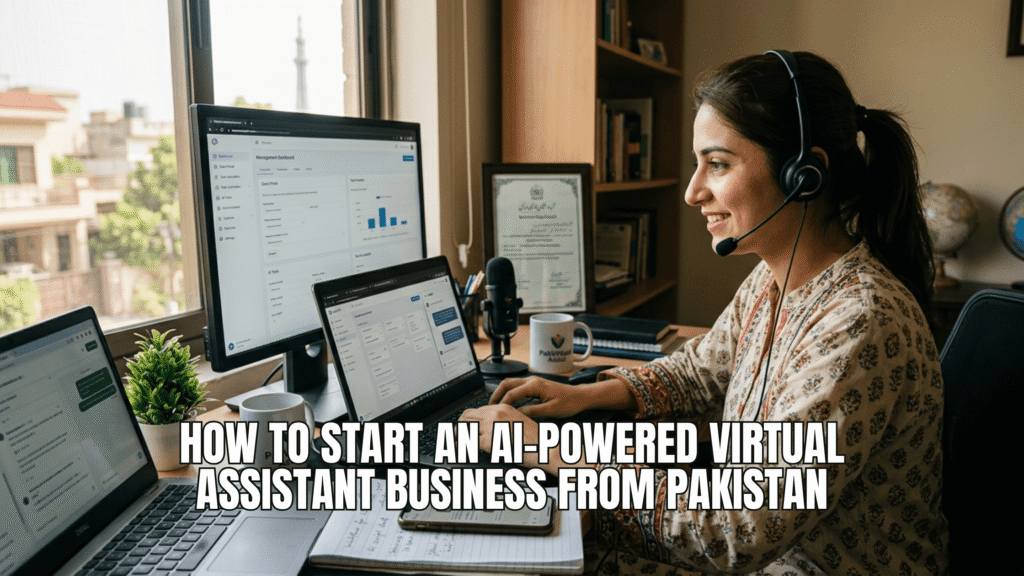
What an AI-Powered VA Actually Does Differently
A regular VA manages an inbox. An AI-powered VA uses ChatGPT or Claude to draft replies in the client’s tone in seconds, then reviews and sends. A regular VA takes meeting notes. An AI-powered VA runs a transcription tool, gets a clean summary with action items, and has it in the client’s inbox before the call even ends.
The skill is not “knowing AI exists.” Every client already knows that. The skill is knowing which tool to use for which task, and being fast enough with it that you can quote a retainer instead of billing hourly.
Services You Can Actually Sell
Don’t advertise yourself as “AI Virtual Assistant” on your Fiverr gig title. Nobody searches for that. Instead, package specific outcomes:
Inbox and calendar management with AI drafting You handle a founder’s inbox using ChatGPT to draft first-pass replies, then send after a quick edit. Combine with Calendly or Google Calendar for scheduling. Realistic starting rate: $250 to $400/month for one client, part-time.
Meeting notes and follow-ups Use a transcription tool (Otter.ai, Fireflies, or even Zoom’s built-in transcript) plus ChatGPT to turn a 45-minute call into a clean summary with decisions and next steps. Agencies and coaches pay well for this because it saves them the worst part of their day. Rate: $10 to $15 per meeting, or a flat $150 to $300/month retainer for 2 to 4 calls a week.
Content repurposing Client records one podcast or YouTube video. You use AI tools to turn it into a blog post, five LinkedIn posts, a Twitter/X thread, and short captions for Instagram. This is one of the highest-demand VA services right now because content creators are drowning in “one piece of content should become ten” advice with no time to do it. Rate: $200 to $500/month depending on volume.
Customer support with AI-assisted responses Handle a small business’s WhatsApp or email support using saved AI-generated response templates you customize per query. Works especially well for e-commerce and dropshipping stores, since a lot of Pakistani freelancers already understand that world. Rate: $300 to $600/month.
Research and data organization Client gives a task like “find me 50 SaaS companies in the fintech space with founder emails.” You use AI tools to speed up research, then organize it into a clean spreadsheet. Rate: $8 to $15/hour or flat project rates of $50 to $150.
Pick one, not all five, when you’re starting out. A generalist AI VA is a hard sell. A specialist who “handles podcast repurposing for coaches” gets hired faster than someone who “does everything.”
The Tools You Need to Actually Learn
You don’t need to master ten tools. You need to be fast and reliable with five.
| Tool | What it’s for | Cost |
|---|---|---|
| ChatGPT or Claude | Drafting replies, summaries, content | Free tier works to start, paid plan ($20/month) once you have clients |
| Notion or Google Workspace | Client organization, shared docs | Free |
| Calendly | Scheduling without back-and-forth emails | Free tier available |
| Otter.ai or Fireflies | Meeting transcription | Free tier covers light use |
| Zapier or Make.com | Automating repetitive handoffs between tools | Free tier for basic automations |
If you’ve already been reading the automation and prompt engineering guides on this site, you already have most of what you need. This is really about packaging those skills into a recurring service instead of one-off gigs.
Where to Find Your First Client
Skip Fiverr for this one, at least at the start. AI VA work sells better through direct outreach and Upwork than through the gig-browsing model, because clients need to trust you with their inbox or calendar before hiring, and that trust is built through a short call or DM conversation, not a gig thumbnail.
Cold DMs to coaches, consultants, and small agency owners on LinkedIn or Instagram work well because these are exactly the people drowning in admin work and too busy to fix it themselves. Keep the message short. Mention one specific thing you noticed about their content or business, then offer to save them a stated number of hours a week.
Upwork, filtered specifically for “virtual assistant” or “executive assistant” jobs that mention AI tools in the description. These clients already expect AI-assisted work, so you’re not explaining the concept from scratch, you’re just proving you can do it well.
Pakistani freelance Facebook groups and WhatsApp communities. A lot of local agency owners hire VAs through referrals before ever posting a public listing. Being visible and helpful in these spaces gets you first-mover access to jobs that never get posted publicly.
Getting Paid as a VA in Pakistan
Since most VA clients are US or UK based, set up Payoneer or Wise before you pitch anyone. Both let you receive USD and convert to PKR at a reasonable rate. Payoneer works well for Upwork withdrawals specifically, while Wise tends to have lower conversion fees for direct client payments. Avoid asking clients to pay through routes that involve extra middlemen fees eating into a $300 retainer, since that adds up fast at this income level.
For local clients paying in PKR, JazzCash or a standard bank transfer works fine.
A Realistic 90-Day Plan
Days 1 to 14: Pick one service from the list above. Set up your tools. Build two sample outputs (a fake client email thread turned into drafted replies, or a sample podcast turned into a LinkedIn post) to use as proof of skill since you have no client history yet.
Days 15 to 45: Send 5 targeted outreach messages a day, mixing LinkedIn/Instagram DMs and Upwork applications. Expect a low reply rate at first. This is normal. Ten replies out of 150 messages is a realistic outcome for a new profile.

Days 46 to 90: Once you land your first client, deliver well above expectation for the first two weeks. Ask for a testimonial before asking for a raise. Use that testimonial to raise your rate for the next client instead of discounting yourself to compete on price.
By month three, a focused AI VA working 15 to 20 hours a week on 2 to 3 retainer clients can realistically be earning $500 to $1,200/month. That is not a ceiling, just a believable starting point if you stay consistent with outreach.
The Mistake Most Beginners Make
They try to look impressive by listing every AI tool they’ve ever opened. Clients don’t hire a tool list, they hire a solution to a specific annoying problem. Lead every pitch with the problem you solve, not the software you use to solve it. The tools are just how you deliver faster than everyone else quoting the same job.
Start narrow, get one client, get one testimonial, then expand. That is the actual playbook, not a highlight reel of AI apps.